If you picture Tennessee living as open space, mountain views, and room to spread out, Monroe County likely feels like a strong match. You may be looking for a home on acreage, a buildable tract, or simply a quieter pace without giving up access to major travel routes. This guide will help you understand what rural living in Monroe County really looks like, what to check before you buy, and how to think about homes, land, and everyday lifestyle here. Let’s dive in.
Why Monroe County Feels Rural
Monroe County has the kind of setting many buyers mean when they say they want "more space." The county covers 635.77 square miles of land, and the Census Bureau's 2024 estimate places the population at 49,154. That works out to about 77 people per square mile, which helps explain the county’s open, rural feel.
Housing data adds more context. Monroe County had 22,123 housing units, a 72.2% owner-occupied housing rate, and a 2020-2024 median owner-occupied home value of $227,500, according to the Monroe County fact sheet from the Tennessee State Library and Archives. That owner-occupied rate is higher than the statewide rate, while the median owner-occupied value is lower than Tennessee’s reported figure.
For many buyers, that combination stands out. You get a county that feels spacious and residential, while still offering a price point that may look more approachable than some other parts of Tennessee.
Monroe County Location and Access
Rural does not have to mean remote. ETEDA’s Monroe County profile notes that the county is located off I-75 with easy access to I-40, which matters if you want country living but still need practical regional connections.
That balance can be especially appealing if you are relocating from out of state or moving from a more crowded market. You may want privacy, land, or a mountain setting, but you probably still care about getting to work, appointments, or weekend destinations without a complicated drive.
Outdoor Lifestyle in Monroe County
A big part of Monroe County’s appeal is the landscape itself. If your ideal home search includes scenery, recreation, and a slower pace, this county offers strong natural anchors.
Tellico Plains and mountain scenery
The Tennessee Department of Tourist Development describes Tellico Plains as sitting in the valley where the Tellico River meets the Little Tennessee River. It also highlights the Cherohala Skyway National Scenic Byway, which runs 43 miles through the Cherokee and Nantahala National Forests and reaches elevations above 5,000 feet.
That helps explain why Monroe County often attracts buyers who want mountain views, wooded surroundings, or a cabin-style setting. Even if you are not looking for a cabin, the scenery can shape the kind of daily experience you want from a property.
Rivers, lakes, and recreation
Outdoor recreation is not just a side feature here. According to Tennessee Vacation’s regional coverage, the Tellico River stretches 53 miles and is stocked with rainbow trout. The same source highlights Bald River Falls, a 90-foot waterfall in Cherokee National Forest.
In Vonore, Fort Loudoun State Historic Park spans 1,200 acres and overlooks the Tellico Reservoir, with Tellico Lake nearby. The Sequoyah Birthplace Museum adds another layer of local history and culture. For many buyers, this means rural living in Monroe County can be about more than the property line. It can also be about how you spend your weekends and what kind of setting you come home to every day.
What Homes and Land Buyers Often Look For
Monroe County’s landscape naturally supports interest in several property types. Based on the county’s setting and recreation profile, buyers are often drawn to acreage, wooded tracts, mountain-view homes, and quieter country settings, as reflected in Tennessee Vacation’s overview of the Cherohala Skyway area.
That does not mean every rural property will fit the same use. A beautiful parcel may still raise practical questions about access, utilities, terrain, and how much of the land is actually usable. When you are looking at homes or land in Monroe County, the best approach is to think beyond the listing photos and focus on how the property works for your goals.
Buying Acreage in Monroe County
If you are searching for land, acreage usually sounds simple at first. Then the real questions begin.
You may be thinking about space for a garden, animals, outbuildings, a workshop, or just privacy. In rural areas, the total number of acres matters, but the more important question is often how usable those acres are for the way you want to live.
Start with Greenbelt questions
For larger parcels, Tennessee’s Greenbelt law is worth understanding early. The Tennessee Comptroller’s Greenbelt guide says qualifying agricultural, forest, and open-space land is valued based on present use rather than highest and best use.
In general, agricultural and forest land must be at least 15 acres to qualify, while open-space land must be at least 3 acres. First-time applications are filed with the county assessor, and the filing deadline is March 15. If you are comparing larger tracts in Monroe County, asking whether a property is currently in Greenbelt can be an important first step.
Ask about future tax changes
Greenbelt can affect how you evaluate a property long term. The same Comptroller guidance notes that rollback taxes may apply if the property’s use changes later.
That is why it is smart to ask clear questions up front. If you plan to change how the land is used, divide it, or move it out of a qualifying use, you will want to understand the possible tax impact before you move forward.
Look past the acreage number
Acreage buyers often focus on the headline number first, but due diligence matters more. The state’s Greenbelt guidance points toward the kinds of practical questions buyers should ask, including whether there is enough usable area for barns, gardens, animals, or a shop, and whether easements or restrictions affect the property.
In other words, 20 acres does not always function like 20 usable acres. Topography, access, and site conditions can make a major difference.
Wells, Septic, and Rural Utilities
When you buy in a rural area, utilities can work very differently than they do in town. That does not need to be a problem, but it does mean you should verify details early.
Private well basics
If a property uses a private well, testing matters. The EPA’s private well guidance says private wells are not federally regulated, which means owners are responsible for testing and maintaining water quality.
The EPA recommends annual testing for total coliform bacteria, nitrates, total dissolved solids, and pH, with additional testing as local conditions warrant. If you are buying a home or land in Monroe County with a private well, this is a normal part of rural property due diligence.
Septic permit basics
For properties without public sewer, septic is a key issue. TDEC states that a septic system construction permit is required before installing a septic system, and that the permit should be obtained before dirt work or construction begins.
The same guidance notes that soil maps may be required and that alternative systems may be needed if site conditions are not suitable for a conventional system. If you are buying vacant land, this is one of the first items to confirm before treating a parcel as buildable.
Road Access and Buildability
Access is another major rural-living topic. A property may look ideal on paper, but legal access and driveway questions can change how useful it really is.
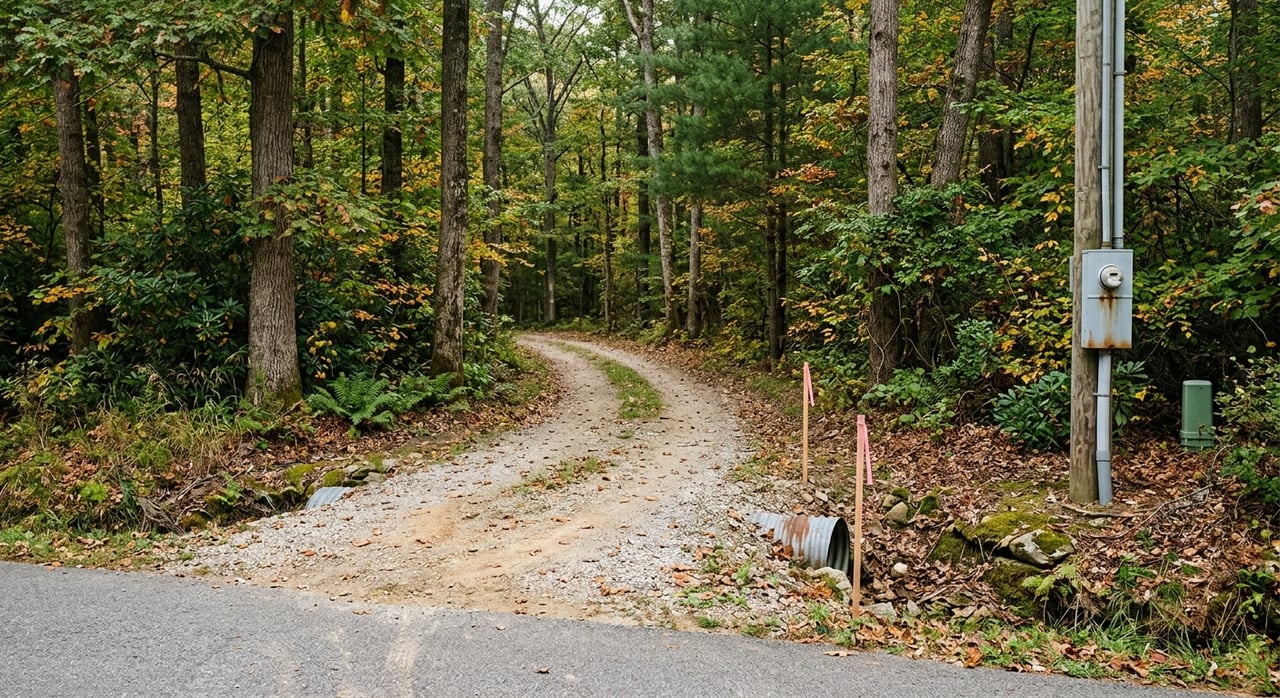
According to TDOT’s highway entrance permit guidance, a driveway or entrance permit is required before constructing a driveway on state highway right-of-way. TDOT also notes that reasonable access does not necessarily mean the most direct or convenient access.
That matters if you are looking at land off a highway, a flag lot, or a parcel reached by a shared private road. Tennessee’s access guidance also contemplates recorded maintenance agreements for common private roads, so you will want to confirm not only how you get to the property, but who is responsible for maintaining that access.
A Simple Rural Property Checklist
If you are comparing homes or land in Monroe County, keep this practical checklist handy:
- Confirm whether water comes from a public system or a private well, and plan for annual well testing if needed.
- Verify whether septic is already permitted, whether soils have been reviewed, and whether the site supports your intended use.
- Check whether the property has direct public-road frontage, a recorded easement, or a private road with maintenance obligations.
- Ask whether the land qualifies for Greenbelt and whether rollback taxes could apply if the use changes.
- Look beyond acreage totals and ask how much of the land is realistically usable for your goals.
This kind of step-by-step review can save you time, money, and surprises later.
Is Monroe County a Good Fit for You?
Monroe County can make a lot of sense if you want elbow room, access to outdoor recreation, and a setting that feels distinctly rural. It can also work well if you want country living without being completely cut off from larger travel routes.
At the same time, rural property requires a more careful buying process. Wells, septic, access, tax treatment, and land usability all deserve attention. If you go in with clear expectations and a solid due-diligence plan, you are much more likely to end up with a property that fits your lifestyle instead of one that creates avoidable headaches.
If you are considering a move to Monroe County or comparing rural properties across Southeast and East Tennessee, Jim Swafford can help you take a clear, practical approach. You deserve direct communication, a defined process, and guidance that helps you evaluate homes and land with confidence.
FAQs
What is rural living like in Monroe County, Tennessee?
- Rural living in Monroe County generally means more space, lower population density, and strong access to outdoor areas like Tellico Plains, the Tellico River, and the Cherohala Skyway, while still being located off I-75 with access to I-40.
What should you check before buying land in Monroe County?
- Before buying land in Monroe County, you should confirm water source, septic permit status, legal access, road maintenance responsibilities, Greenbelt status, and how much of the acreage is actually usable.
Does Greenbelt apply to Monroe County acreage?
- Greenbelt may apply to qualifying agricultural, forest, or open-space land in Monroe County, and Tennessee says first-time applications go through the county assessor with a March 15 filing deadline.
Do rural Monroe County properties often use wells and septic systems?
- Some rural properties may rely on private wells and septic systems, so it is important to verify the water source, understand testing responsibilities, and confirm septic permitting before purchase.
Why do buyers consider Monroe County for homes or land?
- Buyers often consider Monroe County for its rural setting, mountain and river scenery, recreation access, and the chance to find homes or land that support privacy, acreage, and a quieter lifestyle.