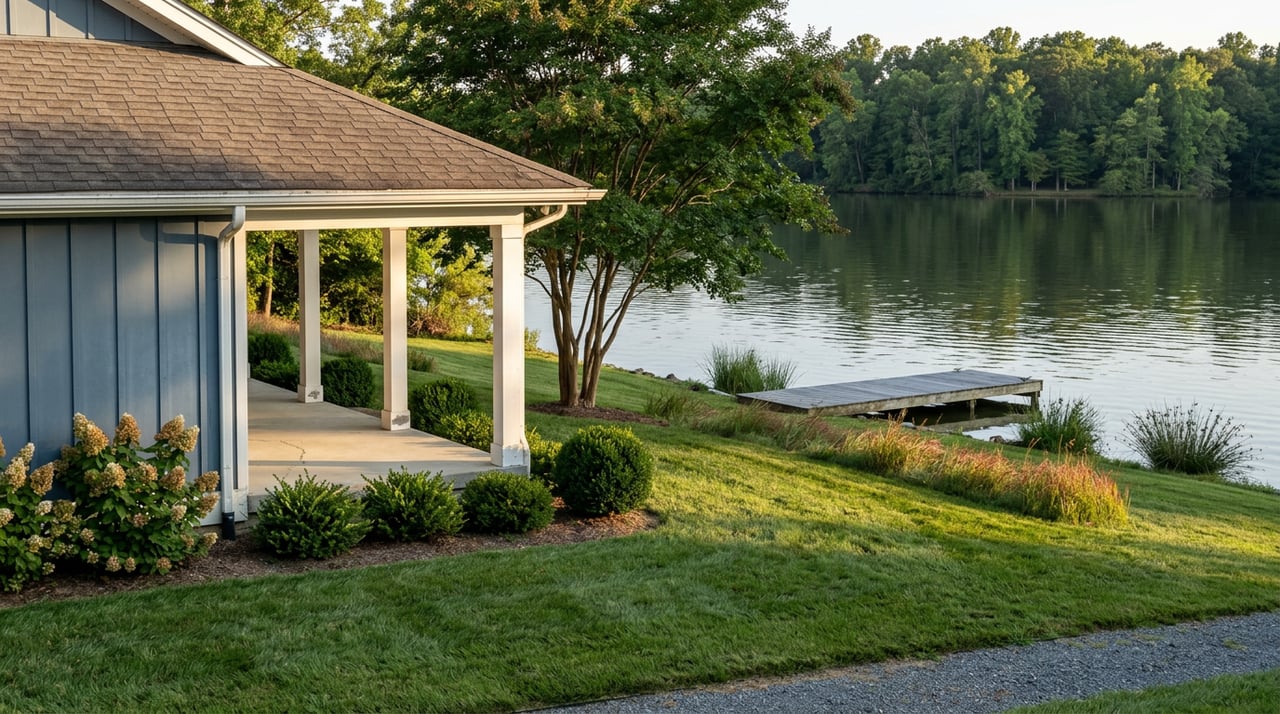
You close on a Tennessee River property in Decatur or Ten Mile. The dock is already there, weathered just enough to look established, tied off with a boat that came with the sale. Everyone shakes hands. The title company recorded the deed. As far as you can tell, everything that belongs to the house now belongs to you.
Sixty days later, the dock does not belong to you. Not legally. Not yet.
That gap between what feels settled at the closing table and what is actually settled with the federal government is the piece of Meigs County real estate that catches waterfront buyers and sellers off guard more than any other. It has nothing to do with price, inspection, or financing. It has to do with a permit that lives with a person, not a parcel.
What TVA Actually Controls on This Shoreline
Meigs County calls itself the Shoreline County for good reason. Nearly 75 miles of frontage touch Watts Bar Lake, Chickamauga Lake, and the Hiwassee River, all part of the reservoir system the Tennessee Valley Authority manages under Section 26a of the TVA Act. That authority covers docks, piers, boathouses, seawalls, rip-rap, even steps and walkways built inside what TVA calls the flowage easement, the strip of land between a property line and the water that TVA often owns or controls even when the deed makes it look like yours.
That easement is why a lakefront lot on Watts Bar is not quite the same animal as a lakefront lot on a privately owned lake. TVA is not a background regulator you can ignore once the survey clears. It is an active party to what you can build, what you can keep, and in some cases what you can sell.
The Permit Follows the Owner, Not the Property
Here is the part that surprises almost everyone who has not bought waterfront in this part of Tennessee before.
A TVA 26a permit for a dock, boathouse, or seawall does not transfer automatically when a property changes hands. The new owner has to apply for a Transfer of Ownership within 60 days of closing. Miss that window and you can lose the grandfathered status the structure had under the previous owner's permit.
That grandfathering matters because shoreline rules have tightened since TVA's Shoreline Management Policy took effect in 1999. A dock built in the 1980s might be larger, closer to the channel, or configured in a way that would not be approved under today's standards. As long as the permit stays properly transferred and the structure stays exactly as built, it keeps its old approval. Let the 60-day window lapse, and TVA can treat any future request on that dock as a brand new application judged against current rules, not the ones your dock was actually built under.
This is not a hypothetical filed away in a policy manual. TVA's own public land-use notices list a deed modification request on Chickamauga Reservoir at Sewee Creek Mile 2.0, squarely in Meigs County. The agency is not a distant bureaucracy for this stretch of river. It is a party actively reviewing paperwork on the same coves where Meigs County buyers are closing.
Why This Slips Past Closing
Nobody at the closing table is set up to catch this. A title company checks for liens, judgments, and clear title to the land itself. A closing attorney confirms the deed is recordable. Neither one is looking at your relationship with a federal agency over a boat dock, because that relationship exists outside the chain of title. You can have a perfectly clean deed and still be out of compliance with TVA the day after you get the keys.
That is why the responsibility falls on the buyer, and why sellers who get ahead of it protect their own sale. If you are selling waterfront in Decatur or Ten Mile, pulling your permit history before you list gives your buyer's agent something concrete to hand over at closing instead of a verbal assurance that "the dock's always been there." If you are buying, ask for that permit number before you're past your due diligence period, not after.
How the Marina Communities Handle This Differently
Not every waterfront option in Meigs County puts this on the individual owner. Public and fee-access points along the county's shoreline, places like Cottonport Marina and Euchee Marina Resort and Campground, along with free access spots such as Eaves Ferry, Goodfield Creek, and Sewee Creek, sit outside this private-permit question entirely because they are not individually owned docks.
The same logic applies to gated lake communities built around a shared marina rather than private slips, where the community itself holds the harbor limit permit and individual buyers never file their own 26a paperwork. Newer developments near Decatur and Ten Mile, including waterfront lots in communities like Espalier Bay and Goodfield Landing, market a shared dock or clubhouse access precisely because it sidesteps the permit transfer question a private dock buyer has to manage alone. If avoiding this paperwork entirely matters to you, that structural difference between a private dock and a community marina slip is worth weighing before you fall in love with a specific lot.
Why Meigs County Frontage Prices Differently Than the Kingston End
The permit issue also helps explain something buyers notice when they start comparing Watts Bar listings across counties: the same lake prices very differently depending on which end you're looking at.
Kingston sits roughly 35 to 40 minutes from Knoxville. Mid-lake areas around Ten Mile and Decatur run closer to 50 to 60 minutes. Spring City, further south, sits about halfway between Knoxville and Chattanooga. That commute gradient, not water clarity or lake size, is the main reason Meigs County frontage often costs less per foot of shoreline than property closer to Kingston. Buyers are trading drive time for more dock and more acreage per dollar, which is exactly why Meigs County has become the value end of this lake for buyers who don't need a Knoxville commute every day.
That value gap is also why permit history carries more weight here than it might somewhere pricier. Older, larger docks built decades ago under looser rules are common on the Meigs County side precisely because this stretch developed earlier and less densely than the Kingston end. The bargain you're getting on square footage of dock is the same bargain that makes the grandfathering question worth checking before you sign anything.
A Closing Checklist Worth Following
For anyone buying or selling private waterfront in Meigs County, here is the order that keeps this from becoming a post-closing surprise:
- Ask the seller for the existing TVA 26a permit number before your due diligence period ends.
- Confirm the dock, boathouse, or seawall was built exactly as shown on that permit. Any unpermitted addition, even a covered second story on a dock, can void the grandfathered status.
- If no permit exists, treat the structure as unpermitted rather than assuming decades of use equals approval.
- Mark your calendar for 60 days from your closing date to file the Transfer of Ownership application with TVA.
- If you're buying into a community with a shared marina, confirm with the HOA or developer that the community, not you individually, holds the harbor limit permit.
- Budget for the current TVA fee, which rose in early 2025, and expect processing to take anywhere from several weeks to a few months depending on what else is in the request.
A Few Direct Questions
Do I need to worry about any of this if my lot has a lake view but no dock? No. The 26a permit question only applies to actual shoreline structures. A view lot with no existing dock and no plans to build one has nothing to transfer.
If the dock has been there for 30 years, doesn't that grandfather it automatically? Age alone does not grandfather anything. Grandfathering depends on the structure matching a valid, transferred permit. A 30-year-old dock with no permit on file is not protected just because it is old.
Does a normal 30 to 45 day closing give me enough time to handle this? Yes, because the 60-day clock starts at closing, not before it. You have time after the keys change hands. The mistake is assuming the clock doesn't exist at all.
None of this is a reason to avoid waterfront property in Meigs County. It's a reason to buy or sell it with someone who checks for this before it becomes a problem instead of after. If you're weighing a lot on Watts Bar, a home on Chickamauga, or river frontage anywhere along the Hiwassee, I'd rather walk you through the permit history on day one than have you find out about it from TVA on day 61. Reach out to Jim Swafford and let's connect before you write an offer.